
Radon Mitigation for Walk-Out Basements: Pressure Dynamics and Pipe Routing
By Jake Lusby · Air Sense Environmental
Radon mitigation for walk-out basements addresses the unique pressure dynamics and structural features of these homes, ensuring effective protection against radon gas. While a portion of a walk-out basement is above ground, these structures in St. Louis, MO, including homes requiring radon mitigation in Jefferson County, Missouri, are still susceptible to elevated radon levels. Radon, a naturally occurring radioactive gas, is drawn into any home when indoor air pressure is lower than the surrounding soil pressure, a phenomenon that applies to all foundation types. The U.S. Environmental Protection Agency (EPA) recommends mitigation if radon levels reach or exceed 4.0 pCi/L, as even lower levels still pose a risk. This guide explores how radon enters walk-out basements and details specialized mitigation designs, pipe routing, and fan placement to safeguard your home.
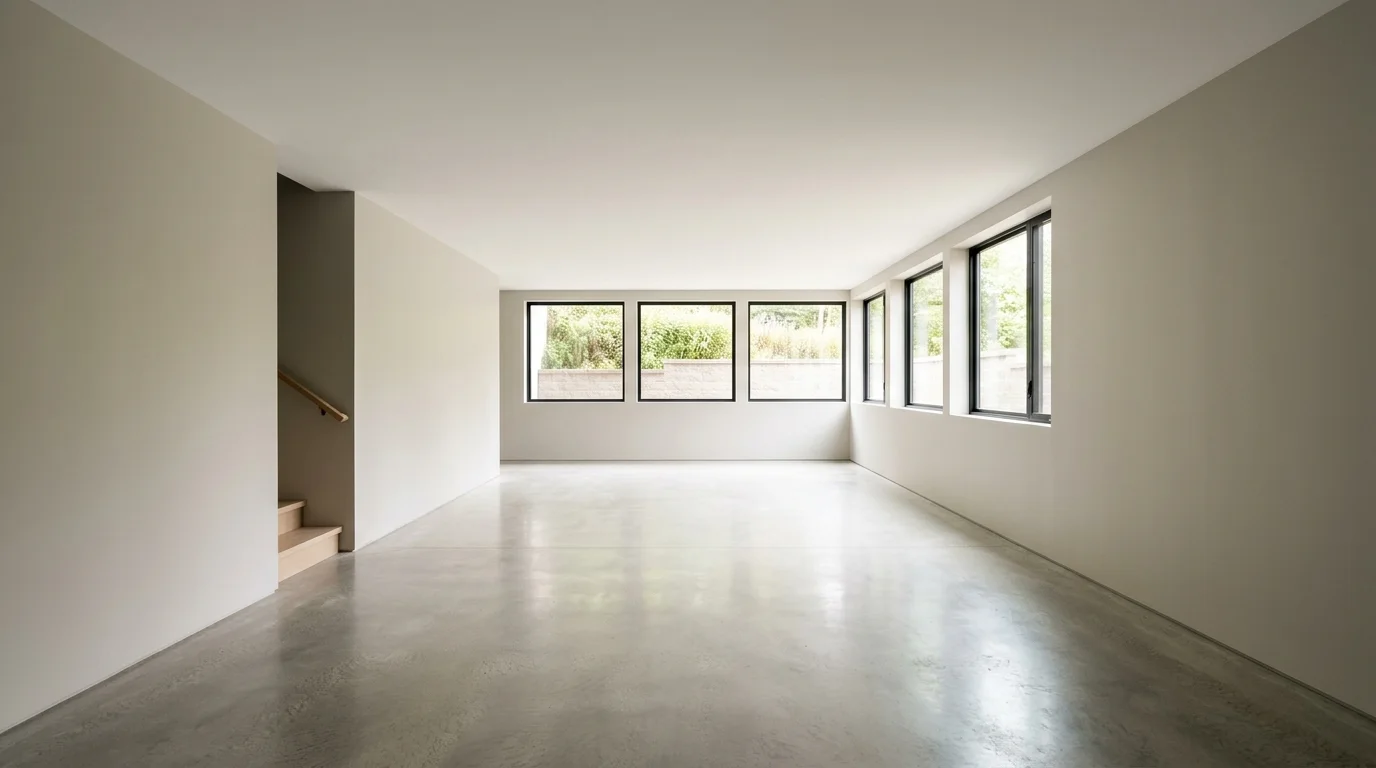
Do walk-out basements have radon problems?
Yes, walk-out basements have radon problems because indoor air pressure draws soil gas through the foundation, despite being partially above ground. This misconception often arises because one or more walls are exposed, suggesting better ventilation. However, radon, a colorless and odorless radioactive gas, is primarily drawn into any home when indoor air pressure is lower than the surrounding soil pressure. This dynamic applies to all foundation types. This pressure differential acts like a vacuum, allowing radon to accumulate to hazardous levels, making testing essential for effective radon mitigation in Jefferson County, Missouri. The U.S. Environmental Protection Agency (EPA) recommends taking action to reduce radon if levels reach or exceed 4.0 pCi/L.
Even with exposed walls, walk-out basements share common radon entry points with other foundation types, including:
- Cracks in the concrete slab
- Construction joints where the slab meets foundation walls
- Gaps around utility penetrations, such as pipes and wires
- Sump pump openings, if present
- Cores in hollow-block foundation walls
How does radon enter a walk-out basement?
Radon enters a walk-out basement primarily due to pressure differences between the soil and the indoor air, a phenomenon known as the stack effect. According to the EPA’s Citizen’s Guide to Radon, this effect creates a vacuum that draws radioactive soil gases from the natural breakdown of uranium beneath your home through foundation openings. Even with exposed walls, the indoor air pressure is typically lower than the surrounding soil, constantly pulling radon inward. The EPA emphasizes that any home, regardless of basement type, can have a radon problem, making testing essential.
Common entry points for radon into walk-out basements include:
- Cracks in the concrete slab or foundation walls.
- Construction joints where different sections of the foundation meet.
- Gaps around utility penetrations, such as pipes for water, sewer, or electrical lines.
- Expansion joints in the floor or walls.
- Sump pits or floor drains, which offer direct pathways to the soil beneath.
Understanding these entry points is crucial for designing an effective radon mitigation system tailored to the unique structure of a walk-out basement.
How is radon mitigation designed for walk-out basements?
Radon mitigation for walk-out basements is designed using active sub-slab depressurization to draw gas from beneath the foundation and address unique pressure dynamics. Systems create negative pressure under the slab, drawing radon out before it enters. Careful planning ensures optimal pipe routing and fan placement for both performance and visual appeal.
Sub-Slab Depressurization Principles
Active sub-slab depressurization is the most reliable method for walk-out basements. Suction pipes are inserted through the floor into the soil beneath. A fan then draws radon gas out, creating negative pressure to prevent entry. According to the EPA’s Consumer’s Guide to Radon Reduction, this vents radon safely outdoors.
Exterior Pipe Routing Options
The EPA’s A Citizen’s Guide to Radon notes that exterior pipe routing is common for walk-out basements. Pipes vent above the roofline, at least 10 feet above ground and away from windows, doors, or other openings. Aesthetic integration, such as painting pipes to match the home, is a key consideration.
Fan Placement Considerations
The EPA specifies that the exhaust fan must not be located in or below a livable area. An unconditioned space alone is not enough: a garage beneath living space is not an acceptable fan location under that guidance. Have the contractor select a suitable attic or exterior location and confirm electrical and local code requirements.
Why is professional radon mitigation crucial for walk-out basements?
Professional radon mitigation is crucial for walk-out basements because their unique architecture creates complex pressure dynamics that require specialized diagnostic tools to resolve. Despite being partially above ground, these basements can still draw soil gas indoors through their below-grade sections, making effective mitigation challenging. Qualified contractors understand how to counteract these varied pressures to ensure radon levels are reduced below the EPA action level of 4.0 pCi/L, protecting your home in Jefferson County, Missouri.
Benefits of professional service include:
- Diagnosing Complex Pressure Dynamics: Experts accurately assess how air movement and soil conditions affect radon entry in hybrid foundation types.
- Proper Sealing Techniques: Professionals identify and seal all potential entry points, from slab cracks to utility penetrations, which is vital for system effectiveness.
- Optimized System Design: They design a sub-slab depressurization system that accounts for both below-grade and exposed foundation sections.
- Aesthetic Integration: Mitigation systems are installed with careful consideration for exterior pipe routing and fan placement, blending with your home’s appearance.
- Post-Mitigation Verification Testing: After installation, professionals conduct follow-up tests to confirm the system effectively reduces radon levels, as recommended by the EPA’s Consumer’s Guide to Radon Reduction.
How does Jefferson County geology affect radon?
Jefferson County geology affects radon levels because the local soil and rock contain naturally occurring uranium that breaks down into radioactive gas. Radon prevalence in the St. Louis, Missouri metro area is significantly influenced by this local geology, making all home types, including walk-out basements, susceptible. This geological reality means that even homes with exposed basement walls can experience elevated radon levels, as the gas seeps into the structure from the ground beneath and around the foundation. The U.S. Environmental Protection Agency (EPA) recommends mitigation if radon levels reach 4.0 pCi/L or higher, and even levels below this still pose some risk.
Geological Factors Influencing Radon
Several factors contribute to radon accumulation:
- Natural uranium deposits in local bedrock.
- Soil permeability that allows radioactive gas to move freely.
- The amount of foundation surface area in direct contact with the ground.
Ask a prospective contractor about qualifications relevant to the work and how the proposed design accounts for your Jefferson County home. Air Sense Environmental can discuss your radon project and its scope. This article does not establish an unspecified company certification or a Missouri license, and local geology alone cannot determine the radon concentration in an individual home.
What is the average cost of radon mitigation for a walk-out basement?
The average cost of radon mitigation for a walk-out basement varies based on the home’s footprint, foundation complexity, and the required pipe routing. Factors influencing the price include the specific design of your home, the severity of the radon problem, and the chosen mitigation method. While some homes may require simpler solutions, others with complex foundations or higher radon concentrations might need more extensive systems. It is always recommended to obtain estimates from qualified professionals to understand the scope and cost tailored to your Jefferson County home.
Factors Influencing Mitigation Costs
Key variables that affect the final installation price include:
- The size and layout of the basement slab.
- Whether pipe routing will be interior or exterior.
- The size of the radon fan required to create adequate negative pressure.
- The amount of sealing needed for cracks and utility penetrations.
How long does it take to install a radon mitigation system in a walk-out basement?
Installing a radon mitigation system in a walk-out basement is typically a quick process, often completed within a single day. The exact duration depends on the home’s specific layout, the chosen system design, and the complexity of pipe routing. While the physical installation is swift, a qualified contractor will also conduct diagnostic tests and post-mitigation verification to ensure the system effectively reduces radon levels. This ensures long-term effectiveness for your Jefferson County property.
Typical Installation Phases
A standard installation involves several key steps:
- Diagnostic testing to determine optimal suction points.
- Sealing foundation cracks and exposed joints.
- Routing the PVC pipe and installing the radon fan.
- Conducting post-mitigation verification testing to confirm levels are below 4.0 pCi/L.
Can opening windows in a walk-out basement reduce radon levels?
Yes, opening windows in a walk-out basement can temporarily reduce radon levels by increasing ventilation, but it is not a reliable long-term solution. Radon concentrations often return to previous values once windows are closed, typically within 12 hours. The EPA advises that natural ventilation is a temporary approach, and homes with levels at or above 4.0 pCi/L require a dedicated mitigation system for consistent protection.
Limitations of Natural Ventilation
Relying on open windows presents several drawbacks:
- Radon levels rebound quickly after windows are shut.
- Conditioned air is lost, increasing heating and cooling costs.
- It does not address the underlying soil pressure drawing the gas indoors.
If you are concerned about radon in your Jefferson County walk-out basement, understanding your home’s unique dynamics is the first step. Air Sense Environmental provides expert radon testing in Jefferson County, Missouri and customized mitigation solutions designed for local geology and home types. Schedule a consultation to ensure your home is protected. Visit our contact page to get started.
Prepared with AI assistance using the linked primary sources. For property-specific advice, contact Air Sense Environmental.