
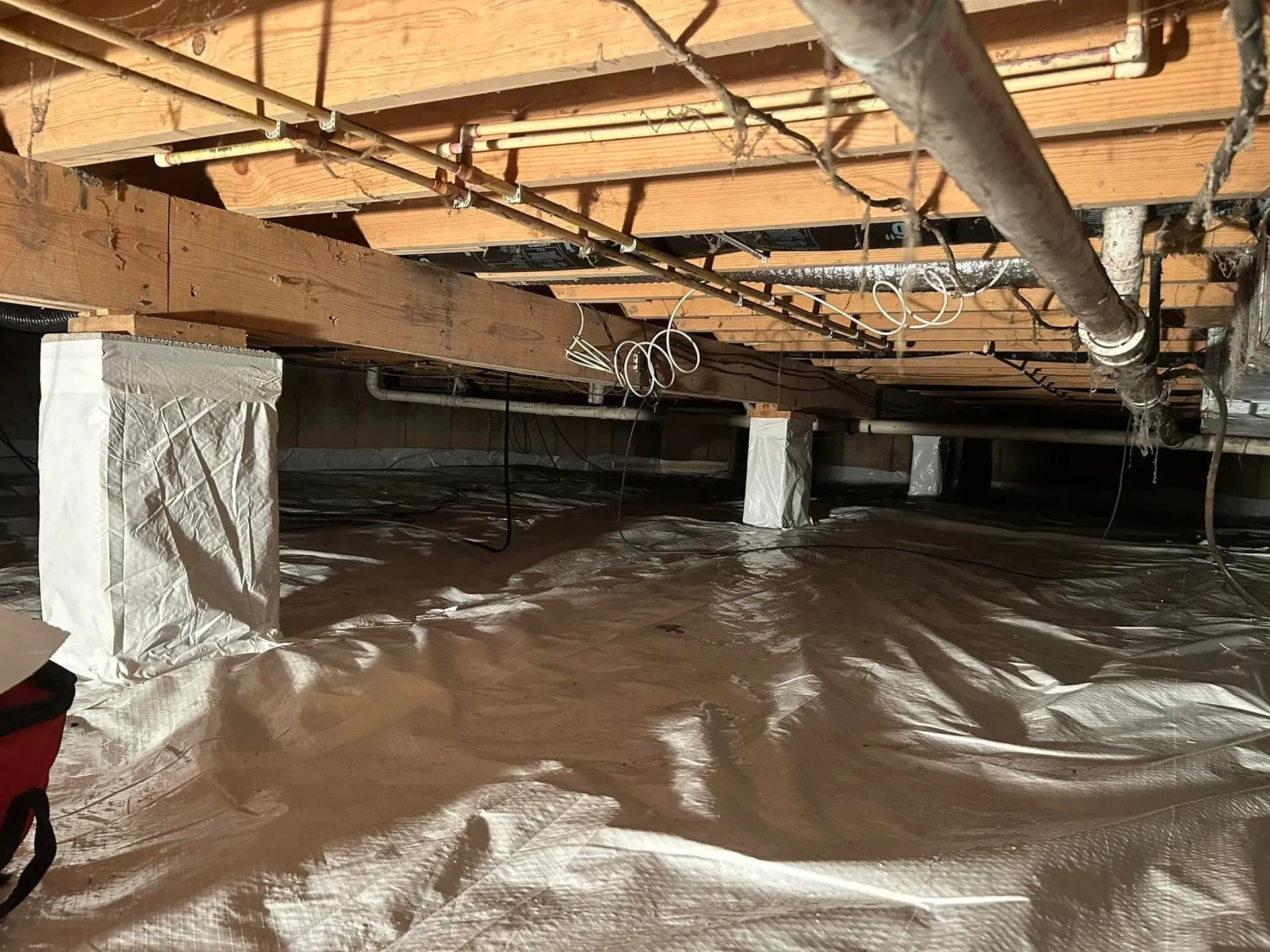
Do homes with crawl spaces have radon?
Homes with crawl spaces can have elevated indoor radon. The relevant measurement is in the home under an appropriate test plan, not an assumption based on what the crawl space looks or smells like.
A crawl-space addition may be easy to overlook when most of the house sits over a basement. Tell the provider which rooms are above it and where access is located. If the space is difficult to enter, describe the opening and share existing photographs rather than taking unnecessary risks.
- Identify rooms above the crawl space.
- Show where the addition meets the original house.
- Provide the indoor-air test report.
How do you get rid of radon in a crawl space?
One established approach is sub-membrane depressurization: a collection arrangement beneath sealed sheeting connected to a fan and vent. EPA’s consumer guide describes this method for crawl-space homes. The actual design needs an assessment of the foundation and access.
Ask whether the proposal includes ground preparation, membrane details and treatment of piers or other interruptions. Those are useful scope questions, not instructions to install a system yourself. If the basement and crawl space are connected, ask how the plan addresses both.
Keep a record of the layout once work is complete. Future plumbing or electrical work should take the membrane and piping into account.
- Ask how penetrations are handled.
- Clarify access and preparation work.
- Document the membrane and pipe arrangement.
- Agree on a radon verification test.
Is crawl space encapsulation the same as radon mitigation?
Encapsulation and radon mitigation are not interchangeable descriptions of a completed result. A membrane may be part of both projects, but radon performance needs its own design and verification. A clean-looking crawl space does not establish the indoor radon concentration.
If you already have a liner, ask whether it is suitable for the proposed radon work. Share who installed it and whether any later repairs were made. Do not assume a new liner is always necessary, or that an existing one can always be reused.
Air Sense’s assessment can identify the scope to discuss for your property. This page does not promise a particular membrane system before an inspection.
How much does it cost to install radon mitigation in a crawl space?
A crawl-space project needs an individual quote. Access, area, existing materials, penetrations and the relationship to other foundation sections can change the proposed work. The standard sub-slab price range is not a reliable ceiling for a membrane project.
Request a scope that separates preparation, membrane work, collection piping, power and testing. If another contractor will prepare the space, agree on the handoff before scheduling the radon installation. For a Hillsboro or De Soto address, include location details when confirming the visit.
- Clarify what must be cleared beforehand.
- Identify work by other contractors.
- Request an itemized written scope.
Questions before you book
Can an existing crawl-space liner be reused?
It needs assessment. The professional should evaluate its condition, seams, attachments and suitability for the proposed radon system.
Does the crawl space need to be tested instead of the house?
Ask for a measurement plan for the occupied building. A crawl-space reading alone should not be treated as the result for living areas.